
Creating a website is easy, but making people find it online is the real challenge. Thousands of businesses launch websites every day, yet many of them struggle because their pages do not appear when potential customers search on Google.
A website can have an attractive design, great products, and useful information, but without visibility, it may not achieve its purpose. This is where SEO plays an important role.
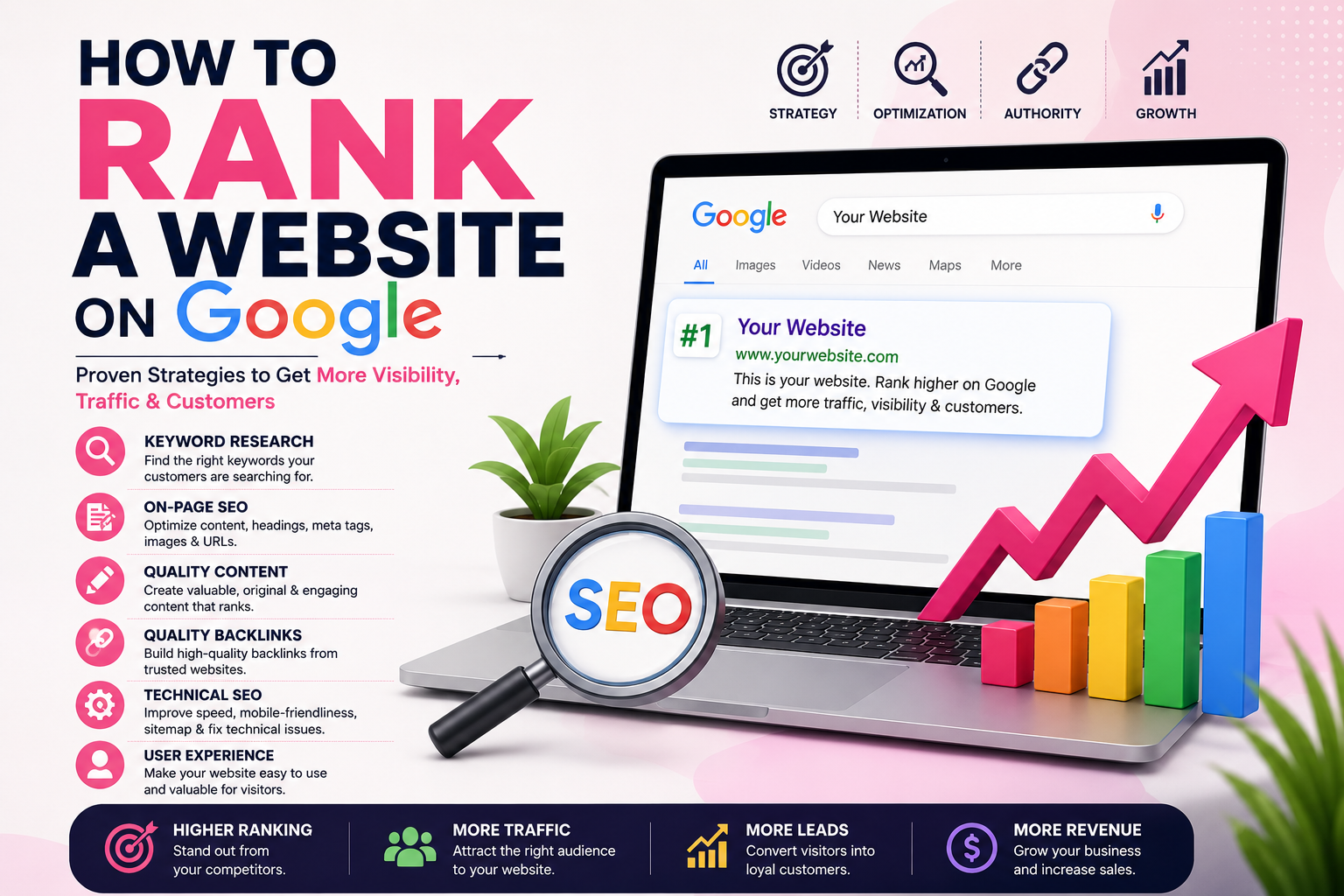
If you are wondering How to Rank a Website on Google, the answer is not a single technique. Google rankings are built through consistent improvements, valuable information, and a website that genuinely helps users.
Start With Understanding What Your Visitors Need
Many website owners make the mistake of focusing only on search engines. They add keywords everywhere and forget that real people are the ones visiting their websites.
Before creating any page or blog, think about your audience.
Ask yourself:
- What information are my customers looking for?
- What problems do they want to solve?
- Why should they choose my website instead of another one?
When your website answers these questions, it naturally becomes more valuable for both users and Google.
Choose Search Terms With a Purpose
Every search on Google has an intention behind it. Some people are looking for information, while others are ready to purchase a product or service.
For example:
Someone searching “what is SEO” is probably learning about the topic.
Someone searching “SEO agency in Abu Dhabi” may be looking for professional help.
A successful website focuses on keywords that connect with business goals. Keyword research tools can help identify useful search terms, but understanding customer behavior is equally important.
The right keyword is not only about getting visitors; it is about attracting the right visitors.
Build Content That Creates Trust
Many websites publish content just to increase the number of pages on their site. However, quantity alone does not improve rankings.
Google looks for content that demonstrates knowledge, experience, and usefulness.
A strong piece of content should:
- Explain topics in a simple way
- Provide practical solutions
- Answer common questions
- Share useful examples
- Give readers a reason to trust your website
For instance, instead of writing a basic article about digital marketing, create content that explains how a small business can use online strategies to attract customers.
Helpful content has a greater chance of being shared, referenced, and ranked.
Make Every Page Easy for Google to Understand
Your website should communicate clearly with search engines. Proper optimization helps Google understand what each page offers.
Important areas to improve include:
Page Titles:
Create titles that describe the page clearly and encourage users to click.
Descriptions:
Write short summaries that explain the benefit of visiting your page.
Headings:
Organize information with headings so visitors can easily read and find answers.
Images:
Use optimized images with descriptive names and alt text.
These small improvements can make a big difference in how search engines understand your website.
Give Visitors a Smooth Website Experience
Imagine visiting a website that takes a long time to open, has confusing navigation, or does not work properly on mobile. Most people will leave quickly.
Google notices how users interact with websites. A positive experience can support better rankings.
To improve your website experience:
- Increase loading speed
- Create simple navigation
- Make pages mobile-friendly
- Use clear designs
- Remove unnecessary distractions
A website should guide visitors naturally from finding information to taking action.
Build Your Website Authority Naturally
Google trusts websites that are recognized as reliable sources. One way websites build authority is through mentions and links from other trusted websites.
However, the focus should not be on collecting random links. The goal is to build genuine connections.
You can improve website authority by:
- Creating valuable resources
- Sharing expert knowledge
- Collaborating with relevant websites
- Publishing useful industry information
When other websites find your content valuable, they are more likely to mention it.
Do Not Ignore Technical Website Health
Sometimes websites fail to rank because of hidden technical problems.
A technically healthy website allows search engines to access and understand your pages properly.
Regularly check:
- Website indexing
- Broken links
- Page loading issues
- Security settings
- Website structure
Google Search Console is a useful tool for identifying problems that may affect your website performance.
Use Local SEO to Reach Nearby Customers
For businesses serving a specific area, local visibility can bring valuable customers.
When people search for services near them, Google uses location information to provide relevant results.
Businesses can improve local presence by:
- Keeping business information accurate
- Collecting genuine customer reviews
- Adding location details
- Creating locally relevant content
Local SEO helps small businesses compete with larger brands.
SEO Requires Patience and Regular Improvement
One of the biggest mistakes website owners make is expecting immediate results. SEO is a long-term process. A website may require weeks or months of consistent work before noticeable improvements appear.
Successful websites regularly:
- Update old content
- Improve weak pages
- Analyze performance
- Follow new search trends
SEO is not about quick tricks. It is about building a strong digital foundation.
Conclusion
Understanding How to Rank a Website on Google is about creating a website that serves people first. Search engines continue to become smarter, and websites that focus on quality, trust, and user satisfaction have a stronger chance of success.
By creating useful content, improving website performance, understanding your audience, and maintaining your SEO efforts, you can increase your online visibility and attract valuable organic traffic.
A high Google ranking is not achieved overnight, but with the right approach and consistent improvement, your website can build long-term growth and authority.